

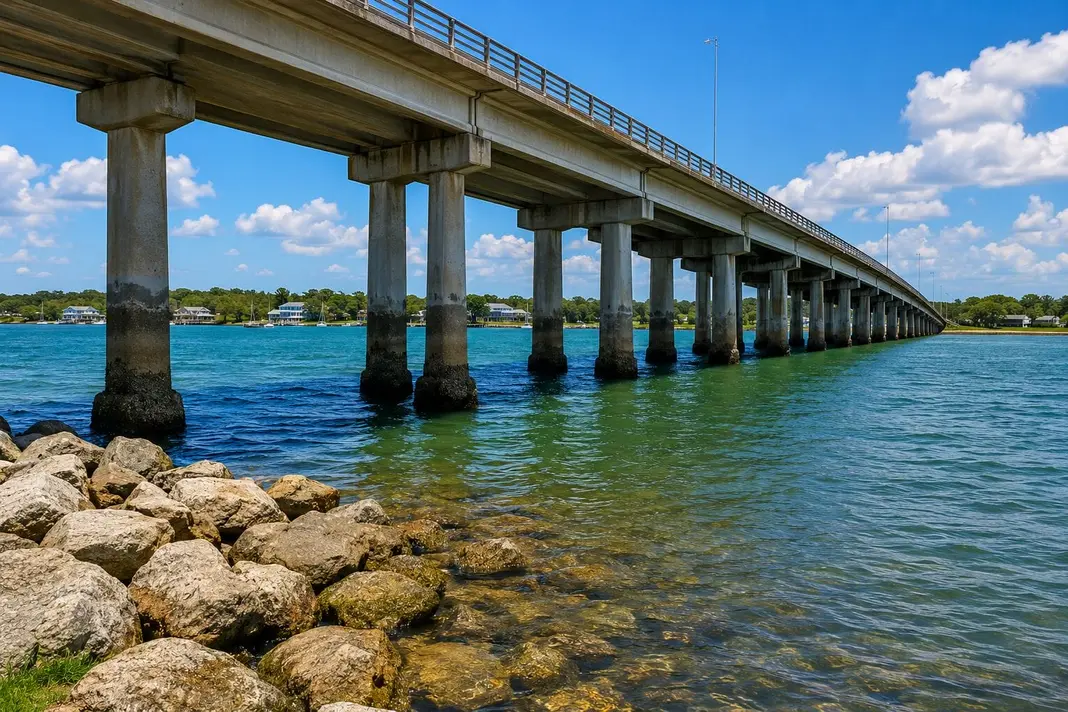
The challenge is figuring out exactly where those fish are positioned. Simply pulling up to a bridge piling or casting toward a jetty isn’t always enough. Current direction, tide stage, depth, structure and bait movement can change where fish are feeding from one hour to the next.
Learning to read these areas can make a significant difference. Instead of randomly working a large piece of structure, you can concentrate on the places most likely to hold fish.
Why Bridges, Inlets and Jetties Hold Fish
Most productive fishing spots have a few things in common: food, moving water, structure and some type of transition. Bridges, inlets and jetties often provide all four.
Current is particularly important. Moving water carries shrimp, crabs and baitfish past structure, giving predators an opportunity to feed without constantly chasing prey. A fish can sit behind a piling, rock or ledge where the current is relatively weak and wait for food to pass through faster water nearby.
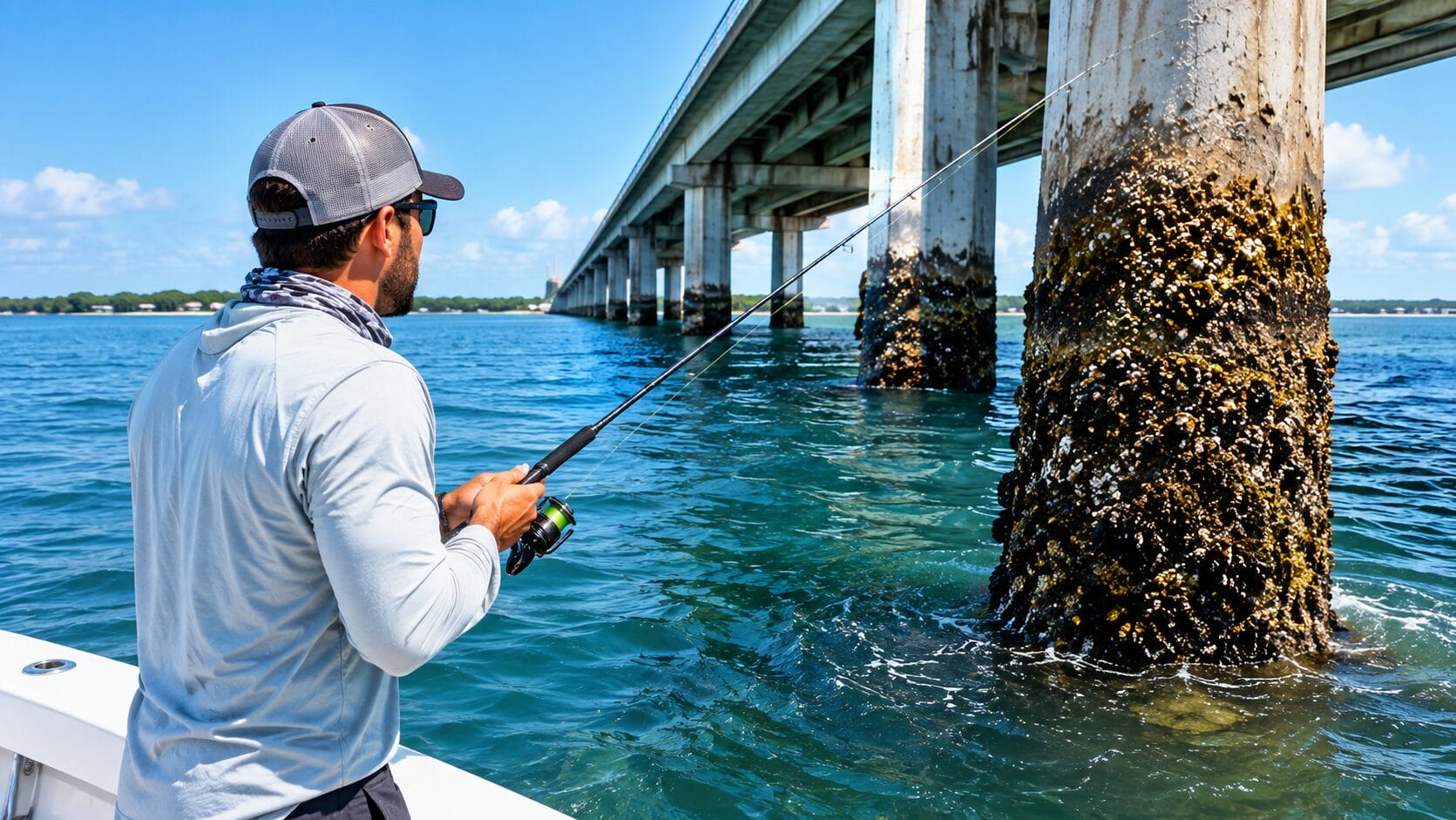
Structure adds another element. Bridge pilings collect marine growth and attract small fish. Jetties provide cracks and ledges that hold crabs, shrimp and baitfish. Inlets contain channels, drop-offs and sandbars that create natural feeding zones.
The result is a concentrated food chain. Find the combination of structure, current and bait, and there’s a good chance larger fish won’t be far away.
Start by Reading the Current
One of the biggest mistakes anglers make around structure is focusing entirely on what they can see above the water. What’s happening beneath the surface is usually more important.
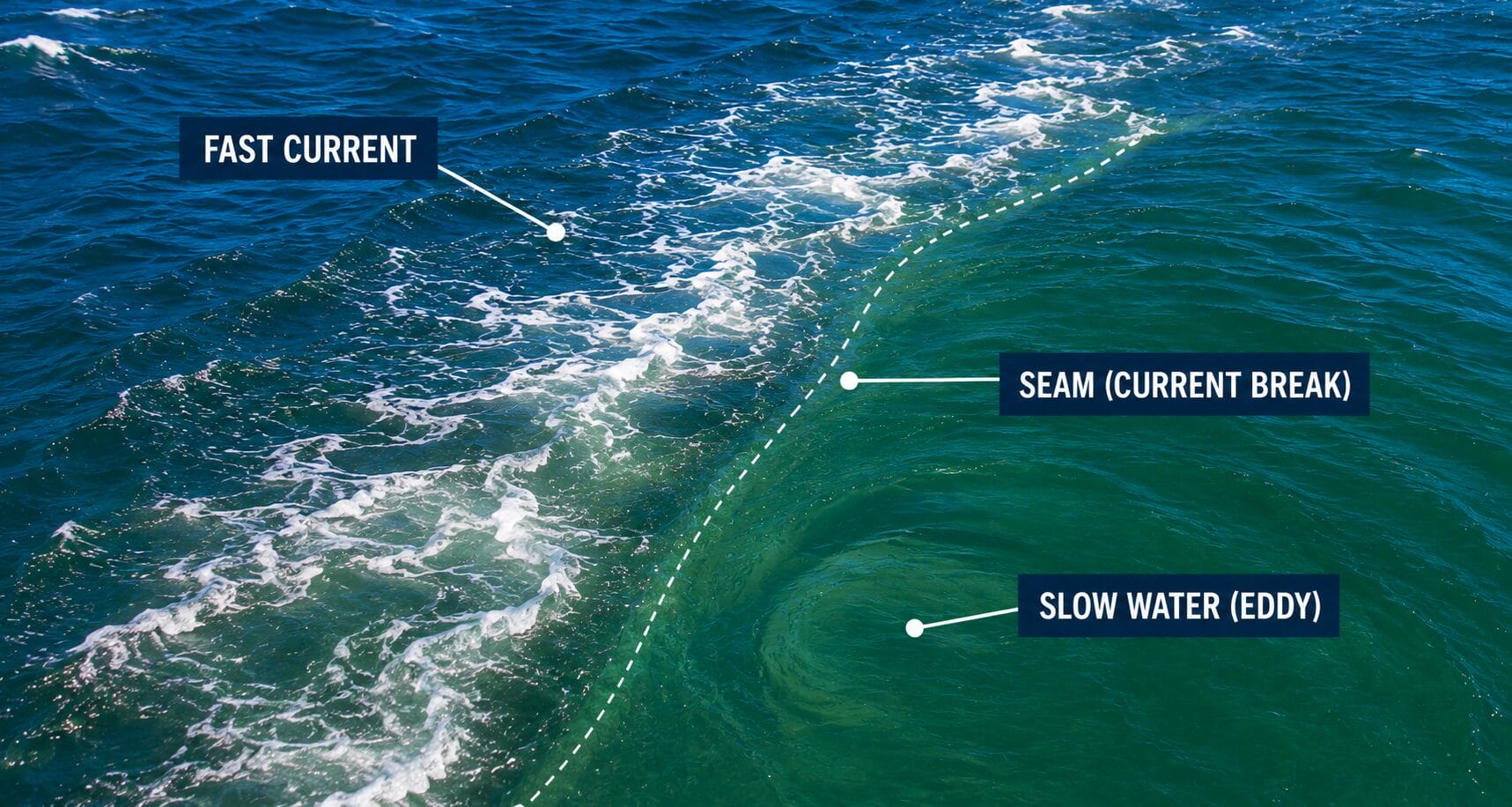
Watch how water moves around a bridge piling or the end of a jetty. Current hitting an obstruction is forced around it, creating faster water along the sides and slower water behind it. The boundary between those areas is a current seam, and predatory fish frequently position themselves nearby.
Eddies are another feature worth finding. Water curling behind a large piling, rock or point can create a circulating pocket where bait becomes disoriented or trapped.
When looking over an area, pay particular attention to:
- Current seams between fast and slow-moving water
- Eddies behind pilings, rocks and other obstructions
- Points where current is forced around structure
- Areas where two currents meet
- Visible bait being pushed through moving water
Don’t assume the strongest current is automatically the best place to fish. Often the better target is immediately adjacent to it, where a predator can remain in slower water and wait for food to come past.
Fish the Tide, Not Just the Location
A productive spot can seem completely empty at one point in the day and come alive a few hours later. The difference is often the tide.
As water begins moving through an inlet or around bridge structure, bait starts moving with it. Predators frequently take advantage of these periods to feed. Depending on the location and species, the best bite may occur during an incoming tide, an outgoing tide or during a particular portion of either one.
Slack tide can be noticeably slower because much of the current-driven feeding activity temporarily stops. Fish may still be present, but they can reposition or become less aggressive.
Keep track of when you catch fish. If a particular bridge produces during the final two hours of an outgoing tide, that’s valuable information for your next trip. Over time, you’ll begin fishing specific structures during the portions of the tide when they’re most productive.
How to Fish Bridge Pilings
Bridge pilings are obvious targets, but there is more to fishing them than casting directly at the concrete.
Start by determining which direction the current is flowing. Fish may hold behind the piling, along its sides or near the bottom where the structure meets the seabed. The exact position can change as current speed increases or decreases.
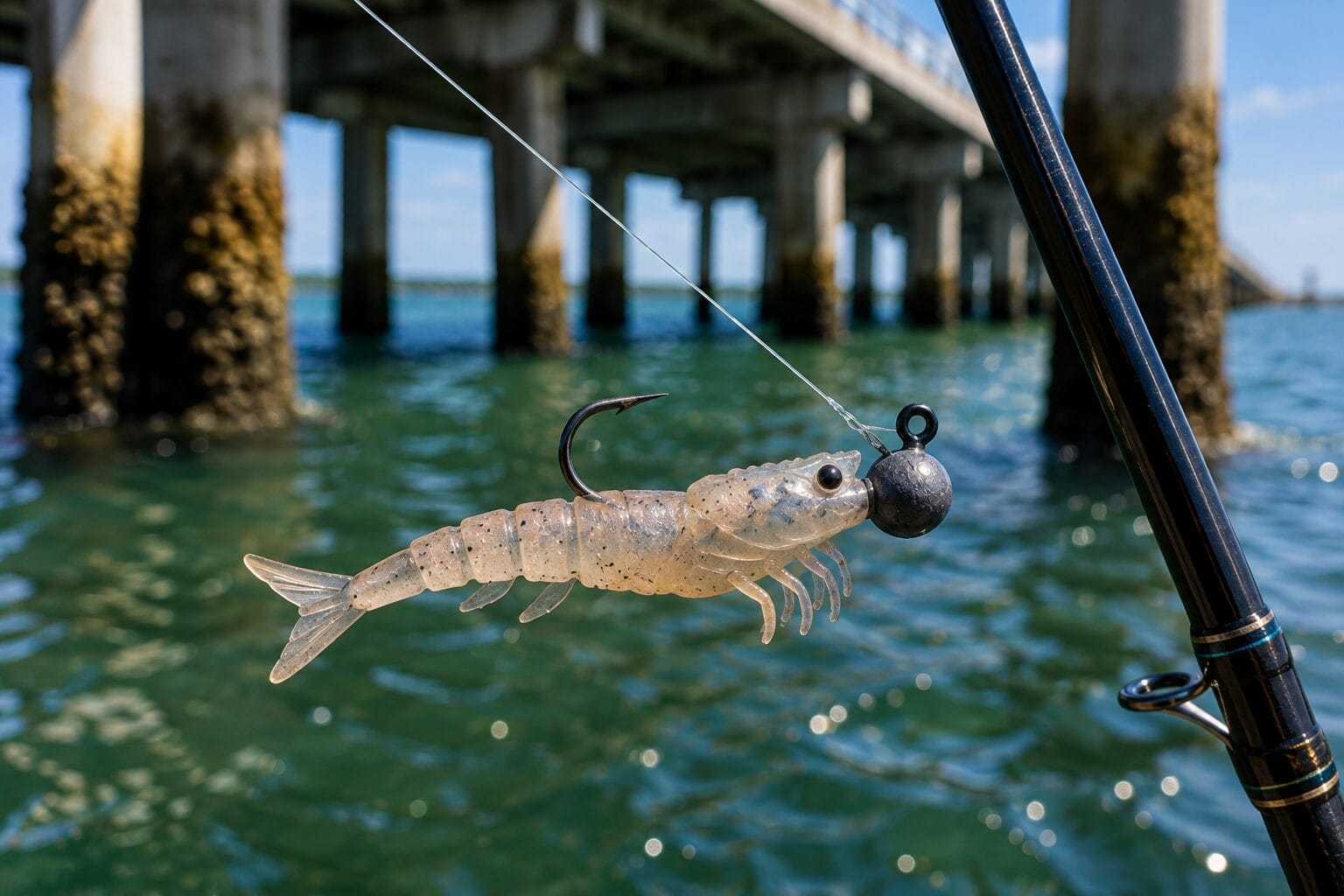
Whenever possible, present your bait naturally with the flow of the water. A shrimp, crab or baitfish drifting toward a piling generally looks more natural than one being dragged directly against the current.
Don’t overlook what’s underneath the boat, either. Current can scour the bottom around bridge pilings and create depressions deeper than the surrounding area. Construction material, rocks and other underwater debris can add even more structure.
Use your depth finder to look for these changes. One piling may consistently produce better than another because of something you can’t see from the surface.
How to Fish an Inlet
Inlets are essentially highways connecting larger bodies of water. Every tide moves tremendous amounts of water through them, carrying bait and creating predictable feeding opportunities.
The main channel is an obvious place to start, but the edges can be even more interesting. Where a deep channel meets a shallower flat or sandbar, the bottom creates a natural transition that predators can patrol.
The mouth of the inlet deserves attention as well. Outgoing water may create visible current lines extending offshore, while incoming water can push cleaner ocean water toward the inlet. Bait can collect along these boundaries, particularly where current interacts with sandbars or changes in depth.
Look for clues such as:
- Diving or hovering birds
- Nervous baitfish at the surface
- Visible current or color changes
- Channel edges and sharp depth changes
- Bait concentrations on sonar
- Surface strikes or actively feeding fish
Instead of immediately running through an inlet on your way offshore, take a few minutes to look around. An active feeding area may be only a short distance from the channel you normally use to head to deeper water.
How to Fish Jetties
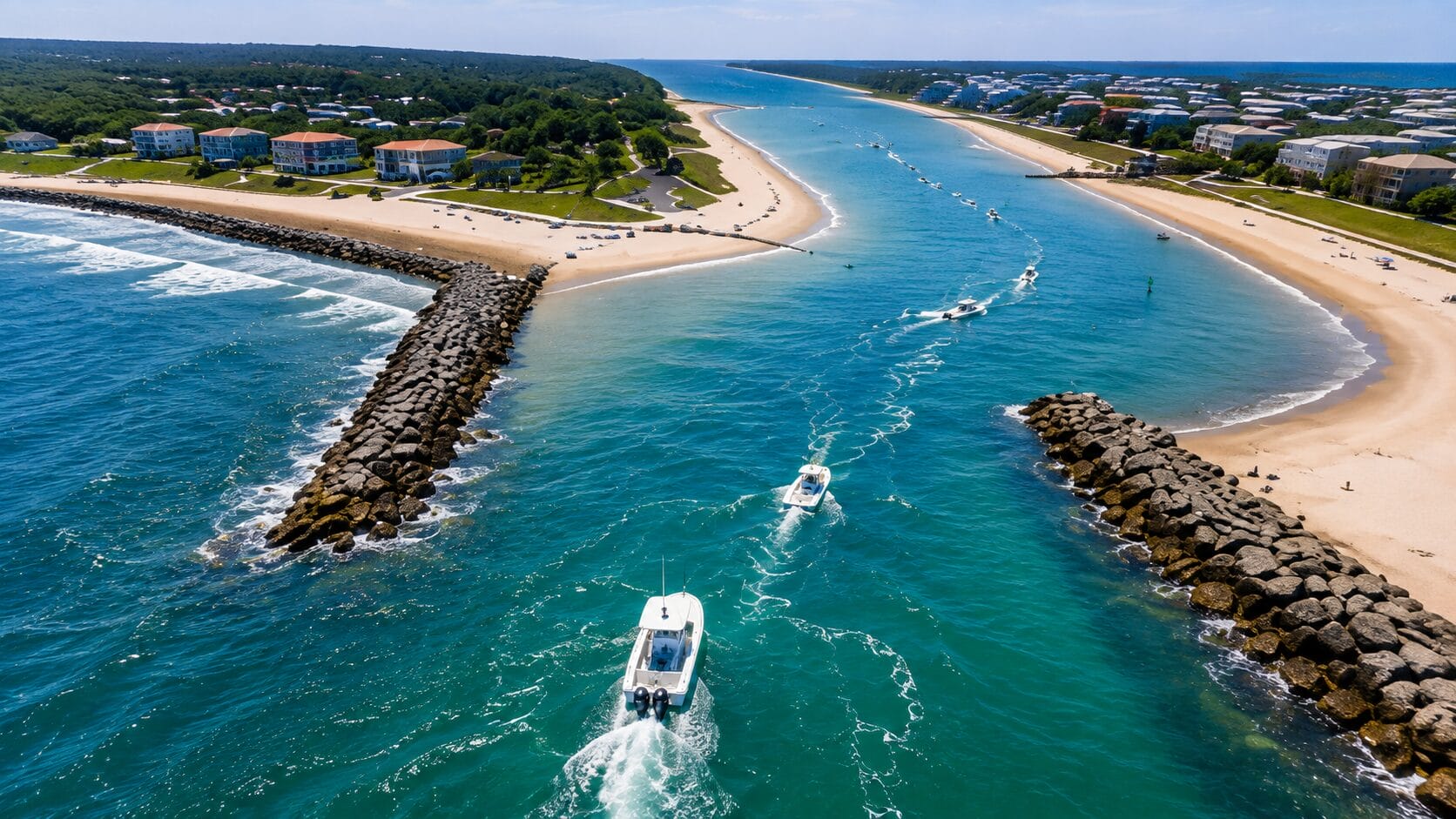
Jetties may look like simple piles of rocks, but underwater they are complex structures that often extend well beyond what you see above the surface.
The rocks create ledges, holes and current breaks while supporting crabs, shrimp, shellfish and small baitfish. Larger predators patrol the edges looking for an easy meal.
One of the most productive areas is often where the rocks meet the natural bottom. This transition creates an edge fish can follow, particularly when combined with moving water.
The end of a jetty can also be excellent because current wraps around the structure and creates multiple seams and eddies. Depending on tide direction, one side may have significantly more activity than the other.
Don’t overlook small irregularities. A point extending farther into the current, a gap between rocks or an underwater section that creates a stronger current break can concentrate fish into a surprisingly small area.
Follow the Bait
Structure alone doesn’t guarantee fish. If there is little food in an area, predators may have little reason to stay there.
Watch for mullet, glass minnows and other baitfish around the surface. Birds hovering or diving over a current seam are another obvious clue. Sonar can reveal larger bait schools that aren’t visible from the boat.
If you’re choosing between impressive-looking structure with no signs of life and a less obvious area loaded with bait, the bait deserves serious attention.
This is especially important around larger bridges and inlets. Rather than fishing every piling or every section of a jetty, locating the areas holding the most bait can dramatically narrow the search.
Match Your Presentation to the Current
Current determines how much weight you’ll need and how naturally your bait or lure moves.
Too little weight may prevent your presentation from reaching the strike zone. Too much can make it look unnatural and increase your chances of getting snagged. The goal is generally to use enough weight to maintain control while still allowing the bait to move naturally.
Artificial lures should also work with the current. Casting slightly up-current and allowing a jig or lure to sweep naturally past a piling or along a current seam can be more effective than retrieving it directly against the flow.
Natural bait works on the same principle. Whenever practical, let the current help deliver the bait to the fish.
Use Your Electronics
Modern electronics can take much of the guesswork out of fishing structure.
Traditional sonar helps identify depth changes, bottom hardness, bait and fish beneath the boat. Side-scanning sonar can reveal structure extending away from the boat, making it particularly useful around bridges, channel edges and submerged sections of jetties.
GPS is equally valuable. When you catch a fish, save the location. If you get several bites along the same edge or behind the same piling, mark it.
After several trips, patterns often emerge. You may discover that the productive area isn’t simply “the bridge.” It might be a small section behind one particular piling during an outgoing tide.
Those details turn a general fishing location into a repeatable spot.
Species You May Find Around Structure
The species available will vary considerably by region, but the basic principles of fishing moving water and structure apply across much of the country.
Along the Southeast and Gulf coasts, bridges, passes and jetties can produce snook, redfish, sheepshead, mangrove snapper, flounder, tarpon, mackerel and jacks. Farther north, similar areas may attract striped bass, bluefish, tautog, fluke and other coastal species.
Tackle should match both the target species and the structure. A fish hooked beside sharp rocks or barnacle-covered bridge pilings presents a much different challenge than the same fish hooked over open sand.
Don’t Overlook Night Fishing
Bridges can become entirely different fisheries after sunset.
Bridge lights attract plankton and small baitfish, which in turn attract larger predators. Although the brightly illuminated water gets most of the attention, the edge between light and darkness can be the better target.
Predators often sit just inside the dark water and attack bait crossing through the light. Look for these shadow lines and position your lure or bait so it naturally crosses the boundary.
Use extra caution at night. Strong current, bridge pilings and boat traffic become more difficult to judge in darkness.
Safety Around Inlets and Jetties
Some of the same conditions that make these locations productive can also make them dangerous.
Inlets can have powerful currents, standing waves and rapidly changing conditions, particularly when wind opposes the tide. Jetties may have submerged rocks extending well beyond the visible structure, while bridges combine strong current with pilings and boat traffic.
Maintain enough distance from structure to maneuver safely and pay attention to surrounding boats. Check the weather, tide and sea conditions before heading out, especially when fishing an unfamiliar inlet.
No fishing spot is worth putting the boat or crew in a dangerous position.
Put the Pieces Together
Consistently catching fish around bridges, inlets and jetties comes down to recognizing patterns.
Start with the structure, but don’t stop there. Determine the direction of the current. Look for seams and eddies. Find depth changes. Watch for bait. Pay attention to the tide stage and use your electronics to understand what’s happening beneath the boat.
Most importantly, remember what worked.
When you catch several fish from the same current break during the same portion of the tide, it probably isn’t a coincidence. Save the location, note the conditions and return when those conditions occur again.
Eventually, you’ll stop looking at a bridge as a series of concrete pilings or a jetty as a pile of rocks. You’ll begin seeing current breaks, feeding lanes, drop-offs and ambush points—and that’s when these seemingly obvious fishing spots become much easier to understand.

